If you’ve looked into hair removal, you’ve almost certainly come across both laser and IPL. They’re often lumped together — and IPL devices are sold for home use at very tempting prices — so it’s a fair question to ask what the actual difference is. In short: both use light to target the pigment in your hair, but they deliver that light in quite different ways, and that affects how well they work.
How they work
Both treatments aim light at the pigment (melanin) in the hair. The hair absorbs the energy, which heats and disables the follicle so that hair growth reduces over time.
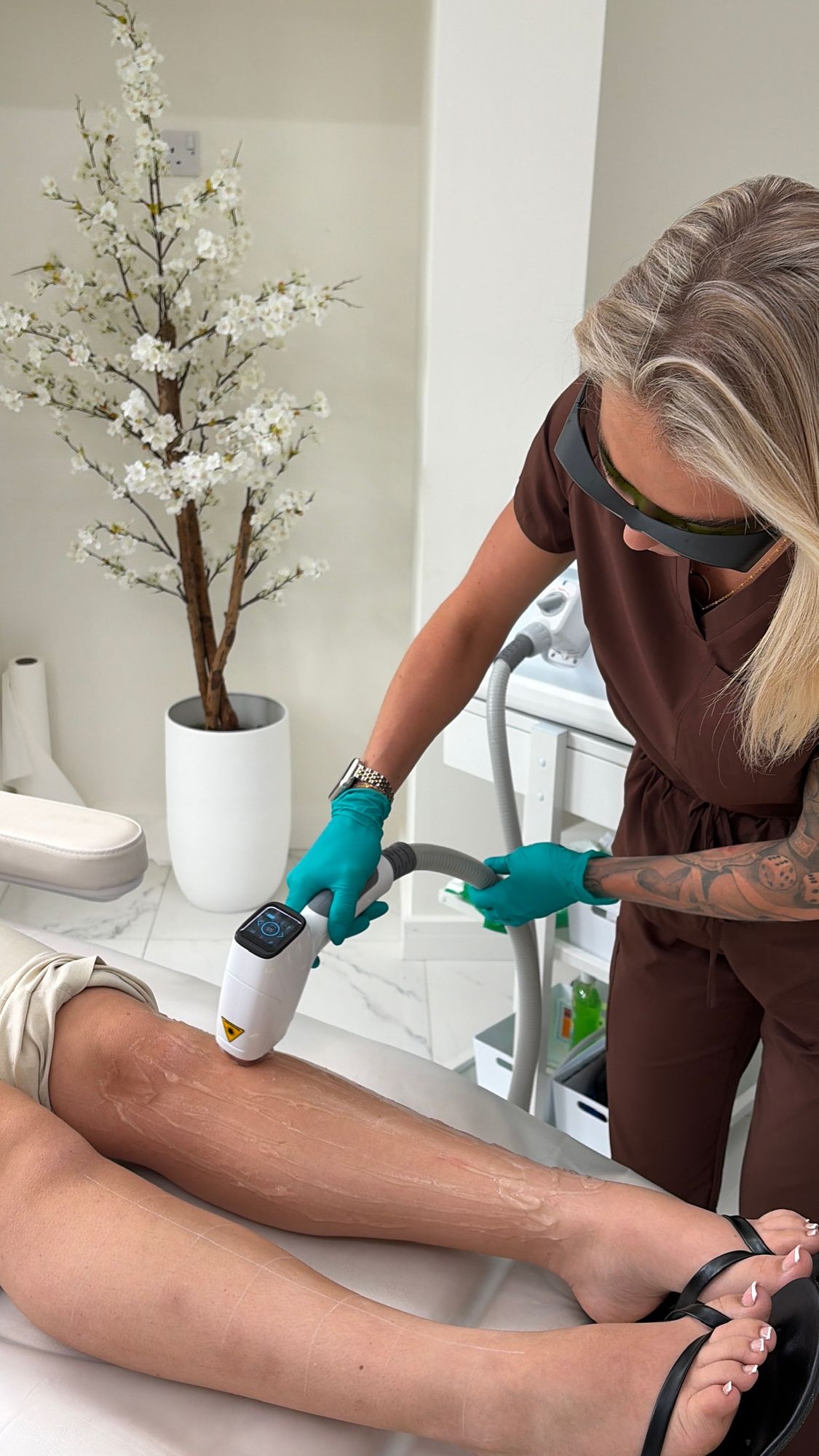
- Laser uses a single, focused wavelength of light. At Erased we use a medical-grade diode laser, which is designed to target the hair follicle precisely while limiting the effect on the surrounding skin.
- IPL (intense pulsed light) isn’t a laser at all. It releases a broad spectrum of light, which is then filtered. It’s a scattered, less targeted beam, so less of the energy reaches the follicle.
The main differences
Precision and power
Because laser light is concentrated on one wavelength, it can deliver more effective energy exactly where it’s needed. IPL spreads its energy across a wider range, and home devices are deliberately set to lower power levels for safety, which is a big part of why results tend to be slower and less consistent.
Number of sessions
Professional laser generally reaches a noticeable reduction in fewer sessions than IPL. IPL usually needs more sessions, and home devices often need regular top-ups over a longer period to keep seeing an effect.
Skin and hair suitability
Both work best where there’s a clear contrast between the hair and the skin, since the light is drawn to pigment. Fine, very light or grey hair responds less well to either. Skin tone matters too, and settings need to be matched to you. That’s why every Erased client starts with a free consultation and patch test, so we can check what’s right for your skin before treating anything.
Who’s doing the treatment
With a home IPL device, you’re the therapist — and you’re working without the trained eye that spots how your skin is responding. A qualified specialist adjusts settings for each area and each visit, which helps both safety and results.
So which is better?
For most people looking for a lasting reduction in hair growth, professional laser is the more effective and efficient route. IPL can suit some people who want a gentler, lower-commitment option and are happy with slower, more modest results — but it isn’t a like-for-like substitute for clinic-grade laser.
Whichever you choose, it’s worth remembering that no light-based treatment guarantees complete, permanent removal. The realistic goal is a significant, long-term reduction in hair growth, with occasional top-ups for some areas. Curious how many sessions that might take? Read our guide to how many laser hair removal sessions you’ll need.
Please note: this is general information, not medical advice. The right treatment depends on your skin, hair and medical history, which we’ll go through at your free consultation and patch test.